What store owners look for in an e-commerce VA
A Shopify, Amazon or Etsy seller looking at your portfolio is asking:
- Do you know my platform? They don't want to train you on Shopify or Seller Central from scratch.
- Are you accurate? A wrong price, a missed order or a wrong size in a listing costs real money.
- Can you talk to my customers? Friendly, clear replies protect their reviews.
- Can you work without being watched? Store owners want someone who follows a process and flags problems early.
Your services, samples and testimonials should answer these questions one by one.
E-commerce VA services to list
Pick two to four and describe what the store owner gets:
- Product listings: new products added with clear titles, descriptions, photos, variants and SEO keywords, ready to sell.
- Order processing: orders checked, fulfilled and tracked every day, with problems flagged before customers complain.
- Customer support: emails and chats answered within hours, with returns and refunds handled to your rules.
- Stock tracking: a simple tracker that warns you before best-sellers run out.
- Reviews and feedback: reviews answered, and unhappy customers followed up kindly.
- Email marketing support: product launch and sale emails built in Klaviyo or Shopify Email.
- Weekly reporting: sales, best-sellers and returns on one page you can read in two minutes.
Show the platforms you know
Store owners often search by platform, so name yours clearly in your headline, services and tools section. Common ones:
- Store platforms: Shopify, WooCommerce, Etsy, Amazon Seller Central, eBay, TikTok Shop.
- Customer support: Gorgias, Zendesk, Shopify Inbox, Gmail.
- Email and marketing: Klaviyo, Shopify Email, Mailchimp, Canva.
- Organization: Google Sheets, Excel, Trello, Notion, Slack.
Only list tools you can use confidently. If you're learning Shopify, a free Shopify development store or the Shopify Academy courses are a good way to build real skills and a certificate to show.
Work samples that win clients
The best e-commerce samples show careful, organized work that saves the owner time:
- Product listings, before and after: a weak product page next to your rewritten version, with a clearer title, bullet points and a better photo order.
- An order or stock tracker: a Google Sheet or Trello board that follows orders from payment to delivery, or warns when stock is low.
- Customer reply templates: answers to the most common questions (shipping times, returns, sizing, late orders), written in a friendly brand voice.
- A sales report: a one-page weekly summary with a chart or two.
- An SOP: a checklist (and an optional short Loom video) for a task like processing returns.
For each sample, add a short title and two or three sentences: the store, the task, what you did and what changed. Lead with a result where you have one, like “Customer emails answered within 4 hours” or “40 products listed in a week”. Hide every customer name, email and order detail in screenshots, and ask before naming a client or sharing their numbers.
Sample projects if you're new
No e-commerce clients yet? Pick a small online store you like (or invent one) and make:
- Five rewritten product listings with titles, descriptions, bullet points and keywords.
- An order tracker in Google Sheets with made-up orders, statuses and delivery dates.
- Ten customer reply templates for the store's most likely questions.
- A weekly sales report with sample numbers and one or two charts.
- A returns SOP: a step-by-step checklist a new team member could follow.
Label each one “Sample project”, and never use a real store's logo as if they hired you. For more ideas, read how to make a VA portfolio with no experience.
Example headline, services and work sample
Headline:
I help Shopify store owners keep orders, customer emails and product listings running smoothly, so they can focus on growing sales.
Services: Product listings · Order processing · Customer support · Weekly sales report
Work sample:
Sample project: product listings for a small skincare store. Rewrote 5 product pages with clear titles, benefit-led bullet points, ingredient details and search keywords, and reordered the photos so the product in use shows first.
For more example headlines, services and work samples, see our virtual assistant portfolio examples.
Choosing a design
Store owners care about clarity and trust more than flashy design. A clean layout that puts your platforms and one result near the top works best:
- Most stores: clean, friendly designs like Bold or Spotlight.
- Fashion, beauty and lifestyle brands: warmer or more playful designs like Journal or Pop.
- If you have a strong result to show: Bento, which puts a result and your tools on the first screen.
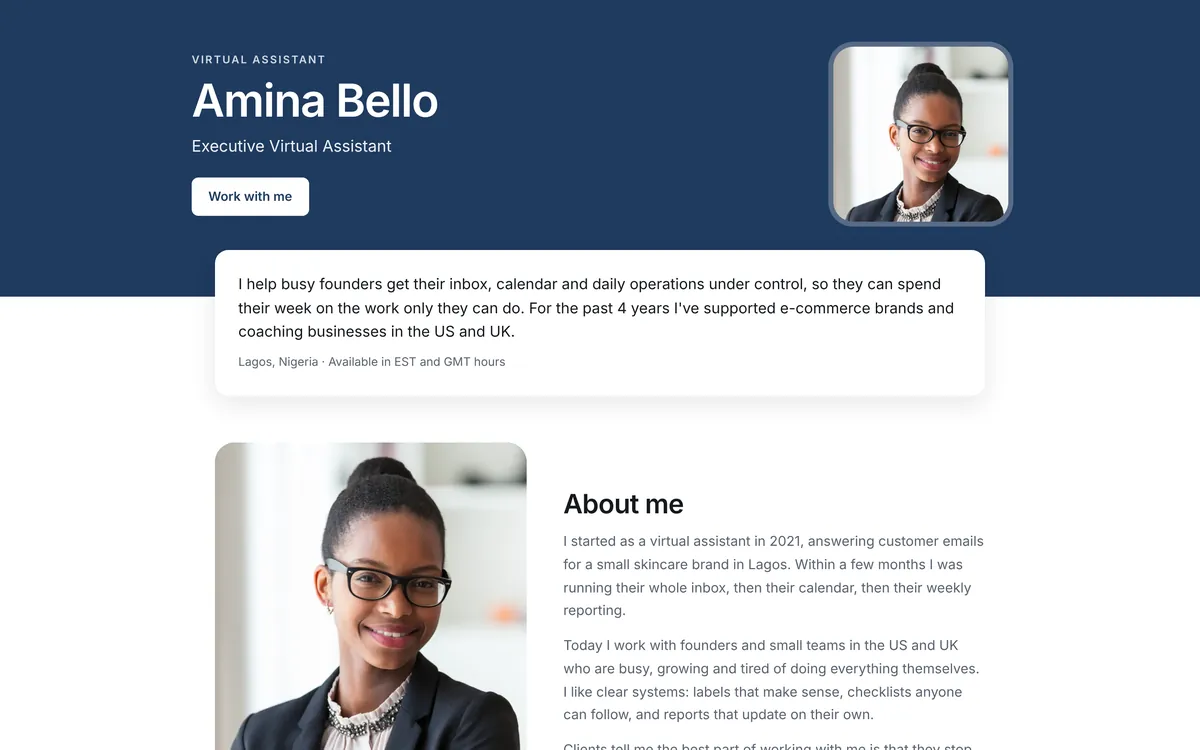
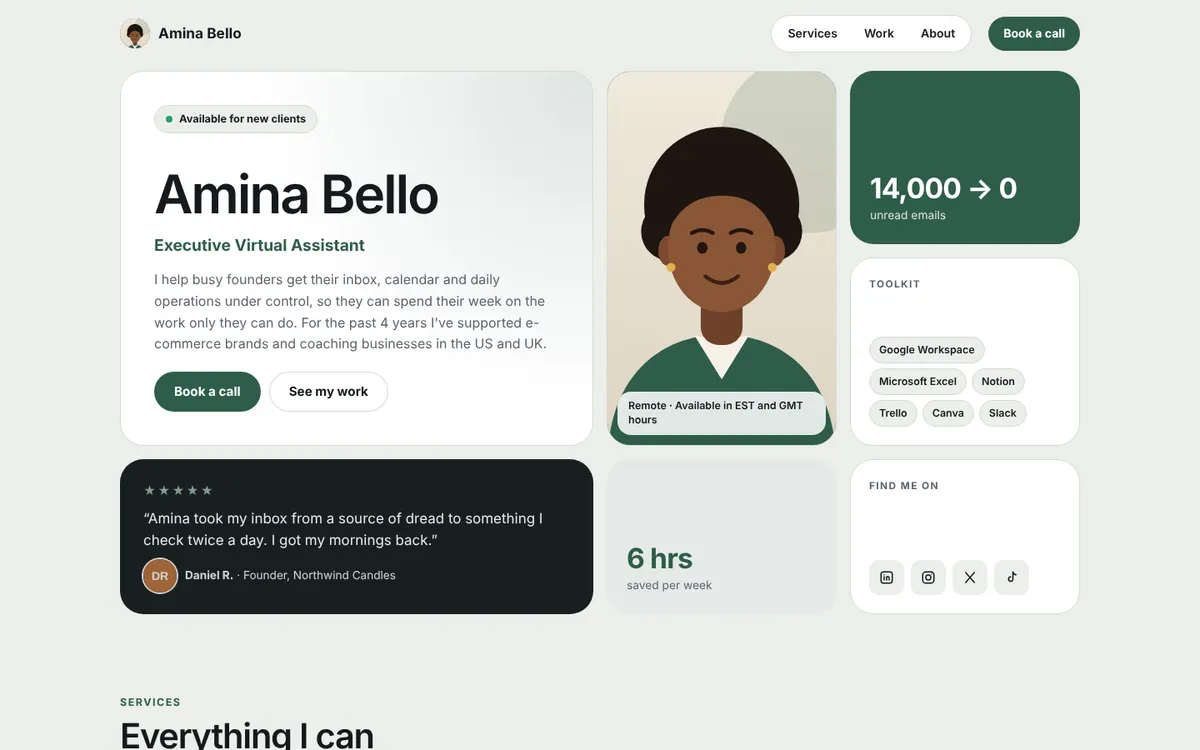
For help choosing, see how to choose a VA portfolio template, and for the full list of sections every portfolio needs, read what to include in a virtual assistant portfolio.
Frequently asked questions
What does an e-commerce virtual assistant do?
An e-commerce VA helps online store owners run the day-to-day side of the business: adding and updating product listings, processing orders, answering customer emails, tracking stock, handling returns, managing reviews and preparing simple sales reports. Some also help with email marketing and social media.
What should an e-commerce VA portfolio include?
A headline that names the platforms and clients you work with, two to four services, work samples such as product listings, order trackers, customer reply templates and sales reports, the tools you know (Shopify, Amazon Seller Central, Etsy, WooCommerce, Klaviyo, Gorgias and so on), testimonials and a booking button.
How do I show Shopify work without sharing a client's private data?
Use screenshots of public pages (product pages, collections) or crop and blur admin screenshots so no customer names, emails, orders or revenue figures show. Always ask the client before naming them. If you can't share anything, recreate the work in a free Shopify development store or with sample data.
Can I build an e-commerce VA portfolio with no experience?
Yes. Pick a small online store (or an imaginary one) and rewrite five product listings, build an order tracker in Google Sheets, write ten customer service reply templates and make a weekly sales report with made-up numbers. Label everything as sample work.
Should I specialize in one platform?
It helps. Store owners often search for a 'Shopify VA' or an 'Amazon VA' by name. You can still list others, but leading with the platform you know best makes you easier to hire.
How many work samples should I show?
Two or three, each showing a different service, for example product listings, an order or stock tracker, and customer support templates. The free VAPortfolio plan has room for 3 work samples.